BPC-157: Why Everyone's Talking About This Healing Peptide
From gut health to tendon repair, BPC-157 has become one of the most researched peptides in regenerative medicine. Here's what the science actually says.
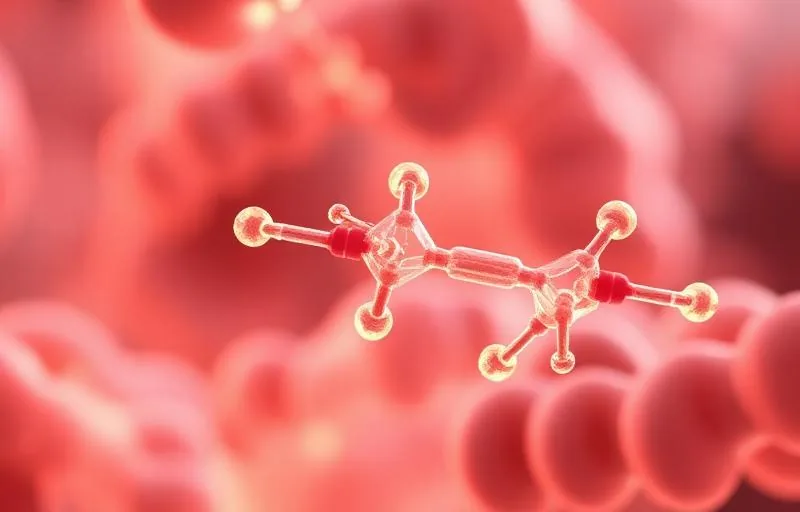
BPC-157 (Body Protection Compound-157) is a synthetic pentadecapeptide, a 15-amino-acid fragment derived from a protein found naturally in human gastric juice. It's been studied extensively in animal models, and the results have gotten a lot of people, including doctors and researchers, very excited.
What Does BPC-157 Do?
The short answer: it accelerates healing. But that undersells it. Here's what research has shown:
- •Tendon and ligament repair: Studies show BPC-157 can significantly speed up the healing of damaged tendons, which is why it's popular among athletes dealing with chronic injuries.
- •Gut healing: Since it's derived from gastric juice, it's no surprise that BPC-157 shows remarkable effects on gut lining repair. People with leaky gut or IBS have reported improvements.
- •Anti-inflammatory effects: It modulates the nitric oxide system and reduces inflammation systemically.
- •Neuroprotective properties: Early research suggests it may protect brain cells and support recovery from traumatic brain injuries.
Administration Routes in the Research Literature
Preclinical studies have used both injectable and oral routes depending on the tissue being studied. This article does not provide dosing, administration, or route guidance of any kind; consult the primary literature and institutional research protocols directly.
What You Should Know
While the animal research is compelling, human clinical trials are still limited. That said, the safety profile in studies has been remarkably clean, no significant adverse effects reported even at high doses.
The key is sourcing. Pharmaceutical-grade BPC-157 from a trusted supplier makes all the difference between a helpful tool and a risky gamble.
Worth the Hype?
For people dealing with stubborn injuries, gut issues, or chronic inflammation. BPC-157 is one of the most promising peptides available. It's not a cure-all, but the evidence supporting its healing properties is hard to ignore.
Where the Molecule Comes From
BPC-157 is a stable 15-amino-acid fragment derived from a larger protein, Body Protection Compound (BPC), isolated from human gastric juice. The full BPC molecule is involved in maintaining gastric mucosal integrity. Researchers found that this 15-aa fragment retained, and in some assays exceeded, the regenerative properties of the parent compound, while being dramatically more stable in solution and across pH ranges. That stability is part of why BPC-157 has accumulated such a wide preclinical literature.
The Mechanisms in Slightly More Detail
Three mechanisms appear repeatedly in the published work:
- •Angiogenesis via VEGFR2. BPC-157 upregulates vascular endothelial growth factor receptor 2 signalling [4]. New blood vessels reach injured tissue faster, oxygen and nutrient delivery accelerates, and repair proceeds. This is the most likely explanation for the consistent tendon-healing data.
- •Nitric oxide pathway modulation. BPC-157 normalizes endothelial nitric oxide synthase (eNOS) activity via the Src-Caveolin-1 pathway [5]. In stress models, heart, brain, gut, this restores vascular tone and protects against ischemic damage.
- •Growth factor expression. BPC-157 stabilizes growth hormone receptor expression on tendon fibroblasts [1] and increases local growth factor production at injury sites.
What the Tendon Studies Actually Show
The Achilles tendon transection model in rats is the most reproduced. Animals treated with BPC-157 (typically 10 µg/kg intraperitoneally) show accelerated tenocyte outgrowth, better-organized collagen fibres, and faster recovery of tensile strength compared to controls [2, 3]. Similar results appear in medial collateral ligament and rotator cuff models.
The Gut Story
BPC-157 was originally characterized in the gut, and that remains one of its strongest evidence bases. Published models include:
- •NSAID-induced gastrointestinal injury, BPC-157 stabilizes intestinal permeability and preserves mucosal cytoprotection against both NSAID- and clopidogrel-induced damage [6]
- •Cysteamine-induced duodenal ulcers
- •Esophagitis
- •Stress-induced lesions
The protective dose window is unusually broad (10 ng/kg to 10 µg/kg in rodents), which suggests the mechanism is at least partly receptor-independent stabilization of the mucosal barrier.
Neuroprotection
Less discussed but increasingly studied. BPC-157 shows protective effects in:
- •Traumatic brain injury (cortical and hippocampal preservation) [7]
- •Spinal cord compression
- •MPTP-induced Parkinsonian models (dopamine system stabilization) [8]
- •Encephalopathy models linked to NSAID toxicity
Administration Routes Used in Research
Subcutaneous injection near the area of interest is the most common research approach, for tendon work, that means peri-injection at the affected tendon. Oral dosing is well-supported for gut-related research because BPC-157 is unusually stable in gastric acid. Some protocols use intramuscular routes for deeper musculoskeletal research.
Dose Ranges Reported in the Literature
| Model | Route | Dose range |
|---|---|---|
| Rodent tendon | IP / SC | 10 ng – 10 µg/kg |
| Rodent GI | Oral / IP | 10 ng – 10 µg/kg |
| In-vitro tenocyte | Cell culture | 0.1 – 1 µg/mL |
Human dosing figures circulate in online community reports, but these are anecdotal, not peer-reviewed data, and this article does not repeat or endorse them. Published human RCTs establishing a validated human dose remain extremely limited; see the section below.
What We Still Do Not Know
- •Long-term human safety. The animal safety profile is exceptionally clean across two decades of work, but published human RCTs remain extremely limited.
- •Pharmacokinetics in humans. Half-life estimates vary widely depending on route and tissue.
- •Optimal protocol design. Daily vs pulsed dosing, total cycle length, and whether systemic effects survive first-pass metabolism in larger animals are all open questions.
How It Pairs With Other Peptides
In recovery research, BPC-157 is most commonly stacked with TB-500 (Thymosin Beta-4). The combination is logical: BPC-157 is the localized vascular healer, TB-500 is the systemic mobilizer. Together they cover more of the repair cascade than either alone. For gut research, BPC-157 is sometimes paired with KPV (a tripeptide derived from alpha-MSH with anti-inflammatory effects in colitis models).
A Realistic Take
BPC-157 is one of the most reproducibly effective peptides in preclinical regenerative research. The mechanism is plausible, the animal data is broad, the safety profile is clean, and research-subject reports align with what the molecular literature would predict. The honest caveat is the human RCT gap. For research purposes, BPC-157 remains a frontline candidate for soft-tissue and gut studies in 2026.
Frequently Asked Questions
What is BPC-157?
BPC-157 (Body Protection Compound-157) is a synthetic pentadecapeptide, a 15-amino-acid fragment derived from a protein found naturally in human gastric juice. It's studied for its role in tissue repair, gut healing, and inflammation modulation.
Is BPC-157 FDA-approved?
No. BPC-157 is not an FDA-approved drug and is not intended for human consumption. It is sold and studied strictly as a research-use-only compound; see our FDA 2026 explainer for its current regulatory status.
Is there human clinical trial data on BPC-157?
Published human randomized controlled trials remain extremely limited as of 2026. Most of the evidence base is preclinical, animal-model, and in-vitro research, which is broad and consistent but not the same standard of evidence as human RCTs.
What does the animal research say about BPC-157's safety profile?
Across two decades of published preclinical work, BPC-157 has shown a notably clean safety profile, with no significant adverse effects reported even at high doses in animal models. That safety record has not yet been established in large-scale human trials.
Why is BPC-157 often studied alongside TB-500?
The two are frequently paired in recovery research because their proposed mechanisms are complementary: BPC-157 is studied as a localized vascular healer, while TB-500 (Thymosin Beta-4) is studied as a more systemic mobilizer of the repair cascade. See our BPC-157 vs TB-500 comparison for the full breakdown.
What should I look for when sourcing BPC-157 for research?
Third-party HPLC and mass spectrometry verification, a batch-specific certificate of analysis, and clear RUO labeling. See our peptide purity and COA guide for how to read one.
References
- Chang CH, Tsai WC, Hsu YH, Pang JH. Pentadecapeptide BPC 157 enhances the growth hormone receptor expression in tendon fibroblasts. Molecules. 2014 Nov 19;19(11):19066-77. doi: 10.3390/molecules191119066. PMID: 25415472.
- Krivic A, Anic T, Seiwerth S, Huljev D, Sikiric P. Achilles detachment in rat and stable gastric pentadecapeptide BPC 157: Promoted tendon-to-bone healing and opposed corticosteroid aggravation. J Orthop Res. 2006 May;24(5):982-9. doi: 10.1002/jor.20096. PMID: 16583442.
- Krivic A, Majerovic M, Jelic I, Seiwerth S, Sikiric P. Modulation of early functional recovery of Achilles tendon to bone unit after transection by BPC 157 and methylprednisolone. Inflamm Res. 2008 May;57(5):205-10. doi: 10.1007/s00011-007-7056-8. PMID: 18594781.
- Hsieh MJ, Liu HT, Wang CN, Huang HY, Lin Y, Ko YS, Wang JS, Chang VH, Pang JS. Therapeutic potential of pro-angiogenic BPC157 is associated with VEGFR2 activation and up-regulation. J Mol Med (Berl). 2017 Mar;95(3):323-333. doi: 10.1007/s00109-016-1488-y. PMID: 27847966.
- Hsieh MJ, Lee CH, Chueh HY, Chang GJ, Huang HY, Lin Y, Pang JS. Modulatory effects of BPC 157 on vasomotor tone and the activation of Src-Caveolin-1-endothelial nitric oxide synthase pathway. Sci Rep. 2020 Oct 13;10(1):17078. doi: 10.1038/s41598-020-74022-y. PMID: 33051481.
- Park JM, Lee HJ, Sikiric P, Hahm KB. BPC 157 Rescued NSAID-cytotoxicity Via Stabilizing Intestinal Permeability and Enhancing Cytoprotection. Curr Pharm Des. 2020;26(25):2971-2981. doi: 10.2174/1381612826666200523180301. PMID: 32445447.
- Tudor M, Jandric I, Marovic A, Gjurasin M, Perovic D, Radic B, Blagaic AB, Kolenc D, Brcic L, Zarkovic K, Seiwerth S, Sikiric P. Traumatic brain injury in mice and pentadecapeptide BPC 157 effect. Regul Pept. 2010 Feb 25;160(1-3):26-32. doi: 10.1016/j.regpep.2009.11.012. PMID: 19931318.
- Sikiric P, Marovic A, Matoz W, Anic T, Buljat G, Mikus D, Stancic-Rokotov D, Separovic J, Seiwerth S, Grabarevic Z, et al. A behavioural study of the effect of pentadecapeptide BPC 157 in Parkinson's disease models in mice and gastric lesions induced by 1-methyl-4-phenyl-1,2,3,6-tetrahydrophyridine. J Physiol Paris. 1999 Dec;93(6):505-12. doi: 10.1016/s0928-4257(99)00119-9. PMID: 10672997.
- McGuire FP, Martinez R, Lenz A, Skinner L, Cushman DM. Regeneration or Risk? A Narrative Review of BPC-157 for Musculoskeletal Healing. Curr Rev Musculoskelet Med. 2025 Dec;18(12):611-619. doi: 10.1007/s12178-025-09990-7. PMID: 40789979.
Disclaimer: This article is provided for scientific, research, and educational purposes only. It is not medical advice and is not intended to guide human or animal use of any substance. The compounds discussed are research materials, are not FDA-approved for human use, and are not for consumption. References are to published research and regulatory sources; consult a qualified professional for any health decision. See also our Editorial & Medical Disclaimer and Research Use Only Disclaimer.
Ready to Explore Peptides?
Browse our catalog or use the calculator for instant pricing.