How to Read a Peptide Certificate of Analysis (COA)
98% vs 99% purity isn't marketing fluff, it's the difference between clean research and contaminated data. Here's how to actually read a peptide COA.
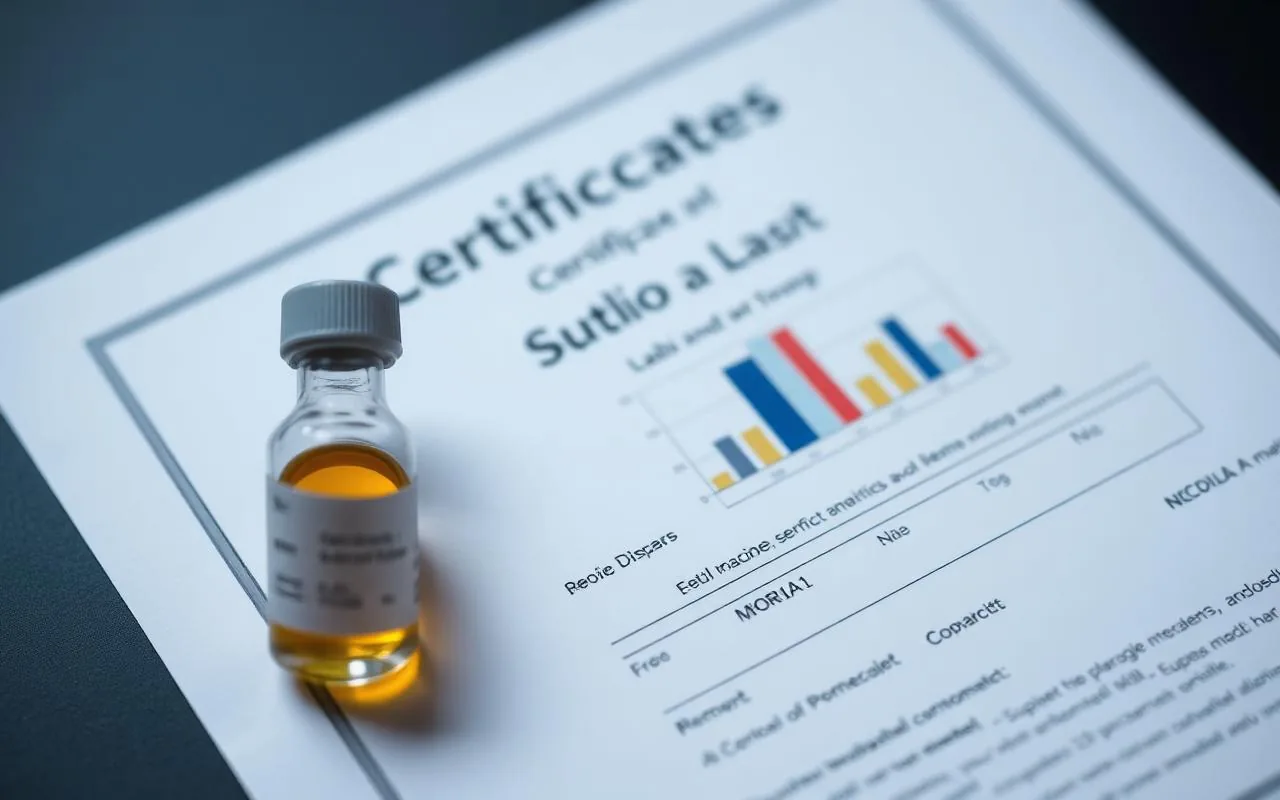
Every serious peptide supplier publishes a Certificate of Analysis (COA) for each batch. Most buyers glance at the purity percentage and move on. That's a mistake, there's a lot more in a COA, and learning to read it properly is the single best way to protect your research.
What a COA Actually Tells You
A proper peptide COA includes:
- •Product name and sequence (the actual amino acid sequence, e.g. GEPPPGKPADDAGLV for BPC-157)
- •Batch / lot number
- •Manufacture and test date
- •HPLC purity % (high-performance liquid chromatography)
- •Mass spectrometry result (confirms molecular weight)
- •Net peptide content
- •Appearance, solubility, water content
- •Endotoxin level (for sterile applications)
If a "COA" you receive is just a logo and a percentage, it's not a COA, it's marketing.
HPLC Purity: What 98% vs 99% Really Means
HPLC separates the peptide from impurities and measures how much of your sample is actually the target compound.
- •>99% pure: Premium research-grade. Suitable for sensitive cell-based studies.
- •98 to 99% pure: Standard high-quality research peptides.
- •95 to 98% pure: Acceptable for some applications but introduces variability.
- •<95% pure: Risky. Impurities can drive false research results.
The remaining 1 to 5% isn't always inert, it can include truncated sequences, oxidation products, or counterion residues that interfere with binding studies.
Mass Spectrometry: The Identity Check
HPLC tells you how pure the sample is. Mass spectrometry (MS) tells you whether what's in the vial is actually the peptide on the label.
A correct MS result will match the theoretical molecular weight of the peptide within ~1 Da. If the MS chart shows a different mass, the sequence may be wrong, truncated, or modified, even if HPLC purity looks high.
Counterion Content: The Hidden Number
Most peptides ship as TFA salts (trifluoroacetate) or acetate salts. The counterion adds weight that isn't peptide.
- •A 5mg vial of TFA-salt peptide may only contain ~4mg of actual peptide
- •Net peptide content on the COA tells you the real amount
For dosing calculations in research, always work from net peptide content, not gross vial weight.
Red Flags on a COA
- •Missing batch number or test date
- •Same COA used for multiple lots
- •No mass spectrometry data
- •Purity above 99.9% (sounds good, often fake)
- •No lab name or signature
- •COA file is a stock template you can find on Google Images
How Enlife Peptides Documents Quality
Every Enlife Peptides batch is tested by a third-party analytical lab and includes:
- •HPLC purity ≥99%
- •Mass spectrometry verification
- •Batch-specific COA available on request
- •Cold-chain handling from synthesis to delivery
Quality you can verify is the only quality that matters in research.
Anatomy of a Standard COA
A complete peptide Certificate of Analysis contains, at minimum:
- •Product name and sequence (single-letter amino acid code)
- •Molecular formula and molecular weight
- •Batch / lot number, traceable to the specific synthesis run
- •Manufacture date and retest / expiry date
- •HPLC purity, usually reported as % area at 220 nm
- •Mass spectrometry result, observed vs. theoretical monoisotopic mass
- •Appearance, typically "white lyophilized powder"
- •Water content by Karl Fischer titration (often <8%)
- •Acetate content for TFA-to-acetate converted peptides
- •Bacterial endotoxin (for injectable-grade material)
HPLC Purity, What "≥99%" Really Means
Reversed-phase HPLC separates the target peptide from truncation, deletion, and oxidation impurities. A ≥99% purity claim means the target peak accounts for 99% of the total UV area at the detection wavelength. It does not mean 99% of the vial contents are peptide, water, salts, and counter-ions still make up the balance of the mass.
Mass Spec, Identity Confirmation
A COA should list the theoretical monoisotopic mass and the observed mass from ESI or MALDI. A match within ±1 Da confirms identity. A larger delta flags a sequence error, oxidation (+16 Da for methionine sulfoxide), or an unintended modification.
Red Flags on a COA
- •No batch number or a batch number that doesn't change between orders
- •HPLC chromatogram not attached (or attached at illegible resolution)
- •Missing mass spec, sequence identity was never confirmed
- •Retest date more than 24 months out for a peptide without stability data
- •No endotoxin result on material sold as research-grade for animal work
Frequently Asked Questions
What HPLC purity is acceptable for research peptides?
Most academic protocols require ≥95%; premium suppliers publish ≥98–99%. Below 95%, impurity peaks can confound biological readouts.
Why does the same peptide have different molecular weights on different COAs?
Usually because one COA reports the free-base weight and the other reports the salt-form weight (TFA or acetate adduct). The peptide sequence is identical.
Do I need endotoxin testing?
For in-vitro cell work, low-endotoxin material is standard. For animal work, endotoxin should be quantified and typically <5 EU/mg.
How often should a supplier reissue a COA?
A COA is tied to a specific batch. A new batch means a new COA. Never accept a COA whose batch number doesn't match the vial label.
Disclaimer: This article is provided for scientific, research, and educational purposes only. It is not medical advice and is not intended to guide human or animal use of any substance. The compounds discussed are research materials, are not FDA-approved for human use, and are not for consumption. References are to published research and regulatory sources; consult a qualified professional for any health decision. See also our Editorial & Medical Disclaimer and Research Use Only Disclaimer.
Ready to Explore Peptides?
Browse our catalog or use the calculator for instant pricing.