Semaglutide vs Tirzepatide: Research Comparison
Both peptides have rewritten the weight management conversation. But mechanistically and clinically, they're very different. Here's the side-by-side breakdown.
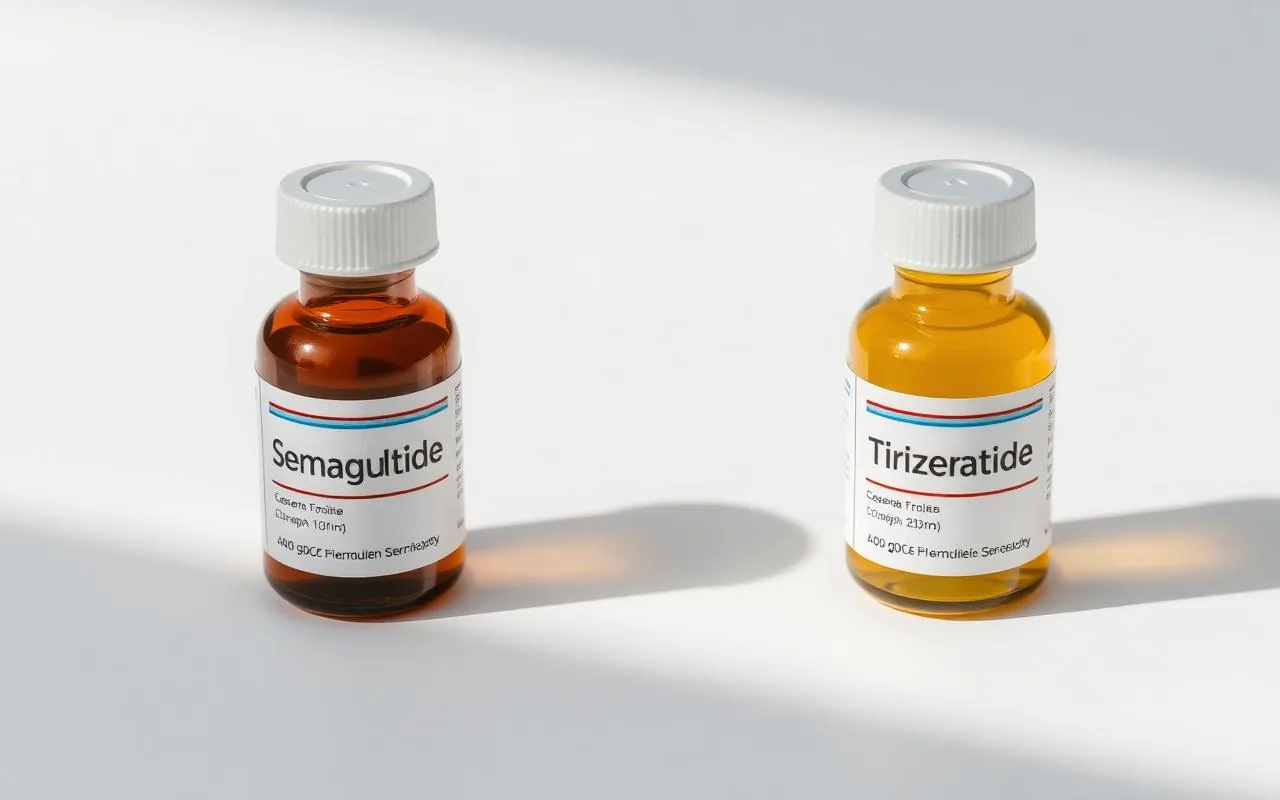
Semaglutide is a single-target GLP-1 receptor agonist and tirzepatide is a dual GIP/GLP-1 receptor agonist, the two most-discussed peptides in metabolic research today. Both have transformed the field, but they are not interchangeable, and the differences matter.
The Core Mechanism Difference
Semaglutide is a single-receptor agonist:
- •Binds the GLP-1 receptor
- •Mimics gut-derived glucagon-like peptide-1
- •Slows gastric emptying, increases satiety, improves insulin sensitivity
Tirzepatide is a dual agonist:
- •Binds both GLP-1 and GIP (glucose-dependent insulinotropic polypeptide) receptors
- •GIP activation appears to amplify GLP-1's effects on satiety and glucose handling
- •Often described as the "twincretin" approach
In short: semaglutide pulls one lever, tirzepatide pulls two.
What Clinical Trials Actually Showed
STEP Trials (Semaglutide 2.4mg weekly)
- •Mean body weight reduction: ~14.9% over 68 weeks
- •Significant HbA1c reductions in type-2 diabetes cohorts
- •Gastrointestinal side effects most common (nausea, diarrhea)
SURMOUNT-1 (Tirzepatide)
- •Mean body weight reduction: ~20.9% at 15mg weekly over 72 weeks
- •Even at 5mg weekly, ~15% loss, matching peak semaglutide
- •Similar GI side effect profile, slightly higher early discontinuation in some arms
Head-to-Head: SURPASS-2
- •Tirzepatide outperformed semaglutide on weight and HbA1c at all doses tested
- •Effect was dose-dependent
Titration in the Trial Literature
Both compounds' trial protocols used gradual weekly dose-escalation designs, and the published data links slower titration to better tolerability, most adverse events in the trial literature trace back to stepping doses up too fast. This article does not provide dosing or titration guidance; consult the primary trial publications directly for any research application.
Side Effect Profile
Both share a similar profile because both hit GLP-1:
- •Nausea (most common, usually first 4 to 6 weeks)
- •Diarrhea or constipation
- •Fatigue
- •Reduced appetite (the intended effect)
Tirzepatide's GIP activation has been associated with slightly better tolerability in some trials despite greater efficacy, possibly because GIP modulates the GLP-1 nausea pathway.
Muscle Loss Concern
Both peptides drive significant weight loss, and a portion of that loss is lean mass. Research protocols increasingly emphasize:
- •Adequate protein intake (1.6 to 2.2g/kg)
- •Resistance training during the dosing period
- •Periodic body composition monitoring
What's Coming Next: Retatrutide
A triple agonist (GLP-1 + GIP + glucagon receptor) is now in late-stage trials, with reported weight reductions exceeding 24% at peak doses. The peptide pipeline is far from done.
Buying Research Semaglutide and Tirzepatide in the USA
Both are widely available as research peptides from US suppliers. When buying:
- •Verify HPLC purity ≥99%
- •Confirm mass spectrometry on the COA, sequence integrity matters more here than for shorter peptides
- •Buy lyophilized powder, never pre-reconstituted liquid
- •Check for cold-chain shipping
Enlife Peptides stocks both as research-grade lyophilized powder with batch COAs.
The Honest Comparison
If raw efficacy is the only metric: tirzepatide wins. If cost-per-mg, supply availability, and a longer human safety track record matter: semaglutide is hard to beat.
For research, the right choice depends on what receptor pathway your protocol is investigating, not which peptide is trending on social media.
Mechanism at a Glance
Semaglutide is a GLP-1 receptor agonist, a single-pathway peptide that mimics endogenous GLP-1 to slow gastric emptying, enhance glucose-dependent insulin secretion, and act centrally on appetite-regulating neurons in the arcuate nucleus.
Tirzepatide is a dual GIP/GLP-1 receptor agonist, a single molecule engineered to activate both the glucose-dependent insulinotropic polypeptide receptor and the GLP-1 receptor. The GIP arm is hypothesized to contribute additional insulin sensitization and possibly to attenuate the nausea signal at matched GLP-1 activity.
Trial Headlines
- •STEP-1 (semaglutide 2.4 mg), 14.9% mean weight reduction at 68 weeks(1)
- •SURMOUNT-1 (tirzepatide 15 mg), 20.9% mean weight reduction at 72 weeks(2)
- •SUSTAIN-6 (semaglutide), 26% MACE reduction in type 2 diabetes
- •SELECT (semaglutide 2.4 mg), 20% MACE reduction in non-diabetic CV disease(3)
Practical Research Differences
| Attribute | Semaglutide | Tirzepatide |
|---|---|---|
| Receptor(s) | GLP-1 | GIP + GLP-1 |
| Peak weight-loss signal (Phase 3) | ~15% | ~21% |
| Cardiovascular outcomes trial | Positive (SELECT) | Ongoing (SURPASS-CVOT) |
| Injection schedule | Weekly | Weekly |
| Nausea peak | Weeks 4–12 | Weeks 4–12 |
Frequently Asked Questions
Is tirzepatide always more effective for weight loss than semaglutide?
On population averages in head-to-head trial reads, yes, SURMOUNT-5 (tirzepatide vs semaglutide) reported 20.2% vs 13.7% at 72 weeks. Individual response varies.
Does the dual GIP arm change the side-effect profile?
Trial data suggest similar overall GI adverse-event rates, though some analyses report slightly better tolerability per unit of weight loss with tirzepatide.
Which agent has stronger cardiovascular evidence today?
Semaglutide, because SELECT completed first. Tirzepatide's CV outcomes trial is still enrolling.
Are the two interchangeable for research modeling?
No. They activate different receptor combinations and should be modeled as distinct compounds, not different doses of the same class.
References
- Wilding JPH, Batterham RL, Calanna S, et al; STEP 1 Study Group. Once-Weekly Semaglutide in Adults with Overweight or Obesity. N Engl J Med. 2021 Mar 18;384(11):989-1002. PMID: 33567185.
- Jastreboff AM, Aronne LJ, Ahmad NN, et al; SURMOUNT-1 Investigators. Tirzepatide Once Weekly for the Treatment of Obesity. N Engl J Med. 2022 Jul 21;387(3):205-216. PMID: 35658024.
- Lincoff AM, Brown-Frandsen K, Colhoun HM, et al; SELECT Trial Investigators. Semaglutide and Cardiovascular Outcomes in Obesity. N Engl J Med. 2023 Dec 14. PMID: 37952131.
Disclaimer: This article is provided for scientific, research, and educational purposes only. It is not medical advice and is not intended to guide human or animal use of any substance. The compounds discussed are research materials, are not FDA-approved for human use, and are not for consumption. References are to published research and regulatory sources; consult a qualified professional for any health decision. See also our Editorial & Medical Disclaimer and Research Use Only Disclaimer.
Ready to Explore Peptides?
Browse our catalog or use the calculator for instant pricing.