How to Reconstitute Research Peptides: 2026 Guide
A step-by-step laboratory guide to reconstituting lyophilized peptides with bacteriostatic water, calculating concentrations, avoiding common errors, and storing reconstituted vials for maximum research stability.
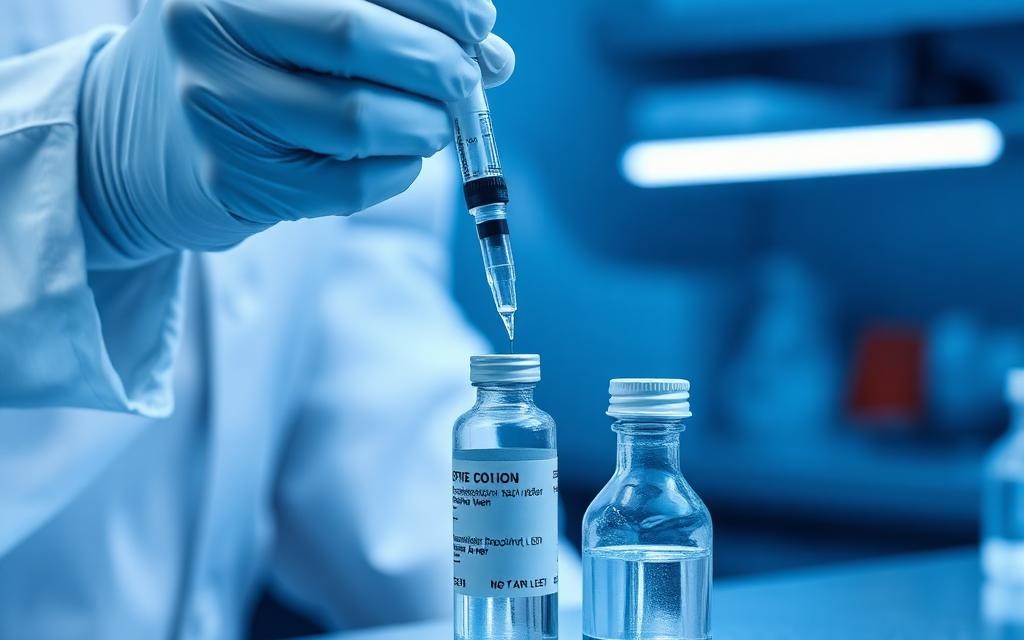
Every research peptide you purchase arrives as a lyophilized (freeze-dried) powder sealed inside a vacuum-purged glass vial. That powder is chemically stable, but it is biologically inert until it is dissolved, reconstituted, into an aqueous solution. The way you perform that reconstitution directly determines the concentration, sterility, and stability of every subsequent dose.
This guide walks through the complete laboratory protocol for reconstituting research peptides. It covers the tools you need, the math behind concentration calculations, the step-by-step technique, the most common mistakes researchers make, and how to store reconstituted vials for maximum shelf life. If you handle peptides in a research setting, this is the single reference you should bookmark.
Why Reconstitution Matters
Lyophilization removes water from a peptide solution while preserving its three-dimensional structure. In powder form, most peptides remain stable for 24 months or longer at minus 20 degrees Celsius. Once water is reintroduced, the clock starts ticking: hydrolysis, oxidation, and microbial contamination all become active risks.
A properly reconstituted vial gives you:
- •Accurate dosing, you draw a known volume and know exactly how many micrograms or milligrams you are administering
- •Sterile solution, bacteriostatic water suppresses bacterial growth for 28 days
- •Stable peptide, correct pH, correct diluent, and correct handling minimize degradation
A poorly reconstituted vial gives you:
- •Concentration errors, under-dosing or over-dosing your research model
- •Contamination, non-sterile water or poor technique introduces bacteria
- •Rapid degradation, wrong diluent, wrong pH, or freeze-thaw cycles destroy the peptide chain
What You Need Before You Begin
Gather the following items in a clean, well-lit workspace before opening any vial:
Required Materials
- •Lyophilized peptide vial, sealed, intact rubber stopper, no visible cracks
- •Bacteriostatic water, 0.9% benzyl alcohol in sterile water; never use tap water, distilled water, or saline alone
- •Insulin syringes, U-100, 0.3 mL to 1 mL capacity, with 29G to 31G needles
- •Alcohol prep pads, 70% isopropyl alcohol for sanitizing vial stoppers
- •Sharps container, for safe needle disposal
Optional but Recommended
- •Vial rack or holder, prevents vials from tipping during reconstitution
- •Laboratory gloves, nitrile, powder-free
- •Calculator, for concentration math (or use our peptide dosing calculator)
- •Permanent marker, for labeling reconstituted vials with date, peptide name, and concentration
- •Refrigerator thermometer, to confirm storage temperature stays between 2 and 8 degrees Celsius
What to Avoid
- •Sterile water for injection (WFI) without benzyl alcohol, it lacks bacteriostatic protection; a reconstituted vial in WFI should be used within 24 hours
- •Tap or bottled water, non-sterile and may contain minerals or microbes that degrade the peptide
- •Bacteriostatic saline with benzalkonium chloride, this preservative can react with some peptide sequences
- •Reusing needles, dulls the tip, increases contamination risk, and can deposit rubber-core particles in the solution
Understanding Concentration: The Math Every Researcher Must Know
Before you add a single drop of water, decide what concentration you want. Concentration is expressed as mass per volume, typically milligrams per milliliter (mg/mL) or micrograms per milliliter (mcg/mL or μg/mL).
The Basic Formula
Concentration = Total peptide mass ÷ Total diluent volume
Practical Examples
Example 1: 5 mg vial reconstituted with 2 mL bacteriostatic water
- •Concentration = 5 mg ÷ 2 mL = 2.5 mg/mL
- •That equals 2,500 mcg/mL
- •On a U-100 insulin syringe, 10 units (0.1 mL) = 250 mcg
Example 2: 10 mg vial reconstituted with 2 mL bacteriostatic water
- •Concentration = 10 mg ÷ 2 mL = 5 mg/mL
- •That equals 5,000 mcg/mL
- •10 units (0.1 mL) = 500 mcg
Example 3: 2 mg vial reconstituted with 1 mL bacteriostatic water
- •Concentration = 2 mg ÷ 1 mL = 2 mg/mL
- •That equals 2,000 mcg/mL
- •5 units (0.05 mL) = 100 mcg
Why Concentration Choice Matters
- •Higher concentration (less water), smaller injection volumes, but harder to measure low doses accurately
- •Lower concentration (more water), larger injection volumes, but finer dose control
For most research applications, a target concentration between 2 mg/mL and 5 mg/mL offers the best balance of accuracy and injection comfort.
Quick Reference: Common Vial Sizes and Volumes
| Vial Mass | Water Added | Concentration | 10 Units (0.1 mL) |
|---|---|---|---|
| 2 mg | 1 mL | 2 mg/mL | 200 mcg |
| 5 mg | 2 mL | 2.5 mg/mL | 250 mcg |
| 5 mg | 1 mL | 5 mg/mL | 500 mcg |
| 10 mg | 2 mL | 5 mg/mL | 500 mcg |
| 10 mg | 1 mL | 10 mg/mL | 1,000 mcg |
Use our online dosing calculator to automate these numbers for any peptide and any protocol.
Step-by-Step Reconstitution Protocol
This protocol assumes a single-peptide lyophilized vial and bacteriostatic water. The same steps apply to multi-peptide blends, with one additional consideration noted below.
Step 1: Prepare Your Workspace
Clear a flat, clean surface. Wash and dry your hands thoroughly. If wearing gloves, put them on now. Lay out all materials within reach. Let the peptide vial and bacteriostatic water vial sit at room temperature for 5 to 10 minutes if they have been refrigerated, cold vials can cause condensation and moisture issues when opened.
Step 2: Sanitize the Vial Stoppers
Wipe the rubber stopper of the peptide vial with an alcohol prep pad. Do the same for the bacteriostatic water vial. Allow 30 seconds for the alcohol to evaporate. Do not blow on the stopper, that reintroduces oral bacteria.
Step 3: Draw the Diluent
Remove the needle cap. Pull back the syringe plunger to draw in an amount of air equal to the volume of water you plan to withdraw, this prevents a vacuum inside the bacteriostatic water vial.
Insert the needle through the rubber stopper of the bacteriostatic water vial at a slight angle, needle bevel facing up. Inject the air into the vial headspace. Invert the vial (needle tip submerged) and slowly draw back the plunger to your target volume, for example, 2.0 mL.
Tip: Pull back slightly past your target volume, then push the plunger forward to the exact mark. This eliminates air bubbles trapped in the needle hub.
Withdraw the needle carefully. Tap the syringe barrel to dislodge any bubbles, then expel them by pushing the plunger slowly until a tiny droplet appears at the needle tip.
Step 4: Introduce Diluent to the Peptide Vial
Insert the needle through the rubber stopper of the peptide vial. Do not inject the water directly onto the powder cake. Instead, angle the needle so the water runs down the inside wall of the vial.
This is the most important step in the entire protocol. Shooting water directly into the powder can create foaming, mechanical shearing, and localized pH shock, all of which stress the peptide structure.
Inject the full volume slowly. You will see the powder begin to dissolve as the water level rises.
Step 5: Dissolve the Peptide
Do not shake the vial. Shaking introduces mechanical stress and can denature sensitive peptide chains. Instead:
- •Gently swirl the vial in a circular motion
- •Roll it between your palms for 30 to 60 seconds
- •If any powder remains stuck to the sides, tap the vial gently against your palm, never against a hard surface
- •Allow the vial to sit undisturbed for 2 to 3 minutes
Most peptides dissolve within 1 to 2 minutes. Some, particularly longer sequences or heavily modified peptides, may take 5 to 10 minutes. Do not heat the vial to speed dissolution, room temperature is sufficient.
Step 6: Inspect the Solution
Hold the vial up to a light source. The solution should be:
- •Clear or slightly translucent (some copper peptides like GHK-Cu are distinctly blue, that is normal)
- •Free of visible particles, no undissolved clumps, no fibers, no precipitate
- •Free of cloudiness, haze can indicate incomplete dissolution or degradation
If you see particles that do not dissolve after extended swirling, do not use the vial. Contact your supplier.
Step 7: Label and Store
Write the following on the vial label with a permanent marker:
- •Peptide name
- •Concentration (e.g., "5 mg/mL")
- •Date of reconstitution
- •Diluent used ("BAC water")
Store the vial in a refrigerator at 2 to 8 degrees Celsius (36 to 46 degrees Fahrenheit). Keep it away from the freezer compartment and the refrigerator door, where temperature fluctuates most.
Special Note: Multi-Peptide Blends
Some vials contain two or more peptides in a single lyophilized cake. The reconstitution procedure is identical, the peptides are already co-formulated and will dissolve together. Do not attempt to separate them. Calculate concentration based on total peptide mass listed on the label, not individual components, unless the supplier specifies otherwise.
Solution Concentration From a Reconstituted Vial
Once reconstituted, the resulting solution concentration is a simple calculation:
Peptide mass (mcg) ÷ Diluent volume (mL) = Concentration (mcg/mL)
For example, a 5 mg vial reconstituted in 2 mL yields a concentration of 2.5 mg/mL (2,500 mcg/mL). Our reconstitution calculator performs this arithmetic for laboratory reference.
This article does not provide dosing, administration technique, or injection guidance of any kind, those are outside the scope of laboratory reconstitution and outside the RUO framework under which these materials are sold. For any research protocol involving live-subject administration, consult the primary published literature and institutional research protocols directly.
The 10 Most Common Reconstitution Mistakes
1. Using the Wrong Water
Tap water, distilled water, and sterile water without benzyl alcohol are the most common errors. Only bacteriostatic water provides the antimicrobial protection needed for multi-dose vials.
2. Injecting Water Directly Onto the Powder
This causes foaming, pH shock, and mechanical stress. Always run diluent down the inside wall of the vial.
3. Shaking Instead of Swirling
Vigorous shaking can denature peptide bonds. Gentle swirling and patience are the correct approach.
4. Reconstituting with Hot or Cold Water
Temperature extremes stress the peptide. Room-temperature bacteriostatic water is ideal.
5. Incorrect Concentration Math
Double-check your calculations. A simple decimal error turns 250 mcg into 2,500 mcg. Use the calculator if unsure.
6. Storing at Room Temperature
Reconstituted peptides degrade rapidly above 8 degrees Celsius. Refrigeration is mandatory.
7. Freeze-Thaw Cycles
Never freeze a reconstituted vial. Ice crystal formation destroys peptide structure. If you accidentally freeze a vial, discard it.
8. Using Dull or Reused Needles
Reused needles deposit rubber-core particles, increase contamination risk, and make injections more painful for research subjects.
9. Failing to Label the Vial
An unlabeled vial in a refrigerator is a guessing game. Label with name, concentration, and date immediately.
10. Ignoring Expiration Dates
Lyophilized peptides have a 24-month shelf life frozen. Reconstituted peptides have a 28-day shelf life refrigerated. After 28 days, potency declines and bacterial risk rises.
Post-Reconstitution Storage Best Practices
Temperature
- •Ideal: 2 to 8 degrees Celsius (standard refrigerator)
- •Maximum acceptable: 10 degrees Celsius for brief periods during shipping
- •Never: freeze, heat, or leave at room temperature for more than 2 hours
Light
Peptides are light-sensitive. Store vials in the original cardboard box, a dark drawer, or wrapped in aluminum foil. Avoid direct sunlight and fluorescent light exposure.
Position
Store vials upright when possible. This minimizes contact between the solution and the rubber stopper, reducing the risk of extractables leaching into the peptide.
Multi-Dose Vials
Each time you pierce the rubber stopper, you introduce a small contamination risk. Limit entries to what the protocol requires. If a research protocol calls for daily dosing, draw the full daily dose in a single entry rather than making multiple punctures.
Travel and Transport
For transporting reconstituted vials to a research facility:
- •Use an insulated cooler bag with ice packs
- •Place a thermometer inside to confirm temperature stays below 8 degrees Celsius
- •Keep vials upright in a padded container
- •Never place vials directly against ice packs, freezing destroys the peptide
Peptide-Specific Reconstitution Notes
Most peptides follow the standard protocol above, but a few have special considerations:
GHK-Cu (Copper Peptide)
Reconstitutes into a deep blue solution. This is normal and expected, the blue color is the copper-peptide complex itself. If the solution is clear or pale, the copper may not be properly complexed.
Semaglutide, Tirzepatide, Retatrutide (GLP-1/GIP/Glucagon Agonists)
These longer peptide sequences may take slightly longer to dissolve, up to 5 minutes of gentle swirling. They are also more pH-sensitive; use only bacteriostatic water, never saline.
Epithalon and Thymosin Alpha-1
Shorter peptides that dissolve almost instantly. Be especially careful not to overshoot your target volume, their rapid dissolution can surprise first-time researchers.
BPC-157 and TB-500
Both are highly soluble and stable after reconstitution. BPC-157 in particular tolerates a wider pH range than most peptides, but standard bacteriostatic water is still the recommended diluent.
When to Discard a Reconstituted Vial
Dispose of a reconstituted peptide vial if any of the following occur:
- •Visible particulate matter that does not dissolve with extended swirling
- •Cloudiness or precipitation that develops after initial clarity
- •Color change (except expected coloration of copper peptides)
- •Offensive odor, peptides should be essentially odorless
- •Past 28 days since reconstitution, even if stored properly
- •Freeze-thaw event, accidental freezing
- •Stopper compromise, if the rubber seal is punctured more than 20 times or shows visible damage
Frequently Asked Questions
Can I use sterile saline instead of bacteriostatic water?
Only if you intend to use the entire vial within 24 hours. Saline lacks antimicrobial preservatives, so bacterial growth becomes a risk after the first entry.
How long does a reconstituted vial last?
28 days at 2 to 8 degrees Celsius when reconstituted with bacteriostatic water. After 28 days, discard even if solution appears normal.
Can I freeze reconstituted peptides for long-term storage?
No. Freezing causes ice crystal formation that shears peptide bonds. Lyophilized peptides can be frozen indefinitely; reconstituted peptides cannot.
What if my peptide does not fully dissolve?
Gently swirl for up to 10 minutes. Some peptides, particularly those with hydrophobic amino acid residues, dissolve slowly. If a visible cake remains after 10 minutes of gentle agitation, contact your supplier, the peptide may have degraded during shipping or storage.
How do I know if my peptide went bad?
Visual inspection is your first line: cloudiness, precipitate, color change, or particles indicate degradation. If the solution looks normal but the peptide is past 28 days reconstituted, potency loss is likely even without visible changes.
Can I reconstitute with less than 1 mL of water?
Yes, but injection volumes become very small and harder to measure accurately. Most researchers find 1 to 2 mL per vial to be the practical minimum for reliable dosing with standard insulin syringes.
Is it safe to reconstitute multiple vials at once?
Yes, provided you label each vial clearly before starting and do not cross-contaminate stoppers or needles between different peptides. Dedicate one syringe per peptide to avoid mixing.
Do I need to filter the solution after reconstitution?
No. Laboratory-grade peptides from a reputable supplier are manufactured under sterile conditions and filtered during production. Additional filtering is unnecessary and risks introducing contamination.
Related Guides and Resources
- •Peptide Storage and Handling Guide, long-term storage, shipping considerations, and lyophilized shelf life
- •Peptide Purity and COA Verification, how to read HPLC and mass spec certificates
- •Ipamorelin and CJC-1295 Stack Guide, reconstitution and dosing for the classic GH stack
- •GHK-Cu Copper Peptide Research, special notes on copper peptide reconstitution
- •Peptide Dosing Calculator, automate concentration and volume calculations
For research-grade lyophilized peptides with verified purity and batch-specific COAs, browse our research catalog. Every order ships with cold-chain protection and full documentation available on request.
*All products referenced are intended strictly for in-vitro laboratory research and are not approved by the FDA for human consumption or therapeutic use.*
Disclaimer: This article is provided for scientific, research, and educational purposes only. It is not medical advice and is not intended to guide human or animal use of any substance. The compounds discussed are research materials, are not FDA-approved for human use, and are not for consumption. References are to published research and regulatory sources; consult a qualified professional for any health decision. See also our Editorial & Medical Disclaimer and Research Use Only Disclaimer.
Ready to Explore Peptides?
Browse our catalog or use the calculator for instant pricing.