NAD+ and Cellular Energy: The Molecule That Powers Your Youth
NAD+ levels drop by 50% between ages 40 and 60. Understanding this molecule, and how to restore it, could be the key to aging well.
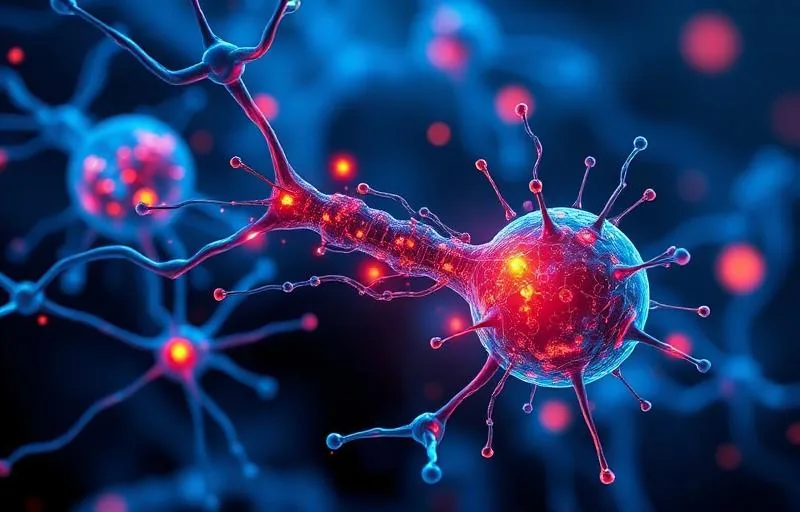
NAD+ (nicotinamide adenine dinucleotide) connects almost every aspect of aging research. It participates in over 500 enzymatic reactions in the human body, and its age-related decline is linked in the literature to broad reductions in cellular function.
What Is NAD+?
NAD+ is a coenzyme found in every living cell. It is essential for:
- •Converting food into cellular energy (ATP)
- •DNA repair
- •Activating sirtuins (longevity-associated genes)
- •Maintaining circadian rhythm
- •Supporting immune function
NAD+ functions as the cellular currency that powers these processes. Research shows that as levels decline, cellular function deteriorates across the board.
Why NAD+ Declines With Age
Several factors drive NAD+ depletion in the research literature:
- •CD38 enzyme: consumes NAD+ and becomes more active with age
- •PARP activation: DNA damage activates PARP enzymes, which consume NAD+ for repairs
- •Inflammation: chronic inflammation accelerates NAD+ consumption
- •Reduced production: endogenous NAD+ synthesis declines with age
Research on Raising NAD+
Precursor Compounds
- •NMN (Nicotinamide Mononucleotide): the most studied NAD+ precursor. Research shows it effectively raises NAD+ levels in human trials.
- •NR (Nicotinamide Riboside): another well-studied precursor with clinical evidence.
Peptide Research Synergies
Several peptides are studied alongside NAD+ research because they target complementary mechanisms:
- •Epitalon – studied for its effect on the cellular systems that utilize NAD+.
- •MOTS-c – a mitochondrial peptide studied for its role in metabolic regulation.
- •Humanin – studied for mitochondrial protection, relevant to NAD+-dependent repair processes.
Lifestyle Variables Studied Alongside NAD+ Research
- •Exercise (particularly HIIT) is associated with increased NAD+ in study populations
- •Fasting and caloric restriction activate NAD+-dependent pathways in research models
- •Heat stress (sauna) is associated with increased NAD+ production
- •Sleep quality is linked to NAD+-dependent repair processes
Summary
The core research findings: NAD+ is critical for cellular health and declines with age; precursor compounds (NMN/NR) have research support for raising NAD+ levels; combining NAD+-related research with peptide research is an active area of study; and lifestyle variables (exercise, fasting, sleep) are consistently studied as amplifying factors.
Current longevity research suggests no single intervention is sufficient, NAD+ research combined with peptide research and lifestyle variables represents one of the more actively studied approaches to aging biology.
What NAD+ Actually Does, Mechanistically
NAD+ sits at the center of three core cellular processes:
- •Energy metabolism. NAD+ is the electron carrier in glycolysis, the TCA cycle, and oxidative phosphorylation. Every ATP molecule your mitochondria produce passes through NAD+/NADH cycling.
- •DNA repair. PARP enzymes consume NAD+ to repair single- and double-strand breaks. Damaged DNA accelerates NAD+ depletion.
- •Sirtuin signaling. Sirtuins (SIRT1 through SIRT7) are NAD+-dependent deacetylases that regulate gene expression around longevity-relevant pathways: mitochondrial biogenesis, fatty acid oxidation, inflammatory tone, circadian rhythm.
A drop in NAD+ therefore propagates outward into energy production, genomic stability, and longevity signaling simultaneously.
The CD38 Story
One of the most important recent developments in NAD+ biology is the recognition that CD38 is the dominant NAD+ consumer in aging tissue.(1) CD38 expression rises significantly with age, partly driven by the chronic inflammation that accumulates over a lifetime. Higher CD38 means faster NAD+ degradation, regardless of how much precursor is available. Apigenin (a flavonoid in parsley and chamomile) and quercetin have been studied as CD38 inhibitors, and pharmaceutical CD38 inhibitors are an active research area.
NMN vs NR, What the Evidence Says
Both NMN (Nicotinamide Mononucleotide) and NR (Nicotinamide Riboside) raise tissue NAD+ in human trials, a randomized placebo-controlled trial in prediabetic women found NMN supplementation improved muscle insulin sensitivity and signaling.(2) The headline differences:
- •NR has a longer history of human RCTs and a clearer regulatory pathway (it has been classified as a dietary supplement in the US since 2016).
- •NMN is structurally one step closer to NAD+ in the salvage pathway. Recent work on the Slc12a8 transporter suggests a direct NMN uptake mechanism that bypasses NR conversion.
- •In direct head-to-head, the elevations in plasma and tissue NAD+ are broadly comparable.
In the published literature, the choice between NMN and NR in study design largely comes down to availability, cost, and regulatory classification. Both raise NAD+ levels in human trials.
Peptide Synergies That Make Sense
NAD+ work pairs with peptides that target the same machinery from a different angle:
- •MOTS-c is a mitochondrial-derived peptide that supports day-to-day metabolic regulation. It engages the same mitochondrial focus as NAD+.
- •Humanin protects mitochondria from apoptosis under stress. Useful when oxidative load is high.
- •Epitalon restores circadian rhythm, which directly influences NAD+ cycling (NAD+ levels oscillate over the 24-hour cycle).
- •GHK-Cu modulates gene expression toward a younger profile, including genes involved in mitochondrial biogenesis.
Lifestyle Inputs That Move NAD+
Nothing moves NAD+ as reliably as the basic stress-response interventions:
- •Exercise, especially HIIT and resistance training, raises tissue NAD+ acutely and chronically.
- •Caloric restriction and time-restricted eating activate sirtuins and conserve NAD+.
- •Heat stress (sauna) and cold exposure both upregulate NAD+ biosynthesis.
- •Quality sleep, slow-wave sleep is when NAD+-dependent repair pathways do their heaviest work.
- •Avoiding chronic alcohol, which is a heavy NAD+ consumer.
Study models combining NMN supplementation with fragmented sleep and no training show a fraction of the available effect compared to controlled conditions.
How NAD+ Research Protocols Are Structured
Published research on NAD+ precursor supplementation is generally studied alongside a defined set of variables: timing relative to the natural NAD+ peak, co-administration with CD38-inhibiting compounds like apigenin, structured resistance training, time-restricted eating windows, and sleep-quality controls. MOTS-c has appeared as an additional study arm targeting mitochondrial signaling directly.
What to Track
NAD+ is hard to measure directly, but downstream markers are tractable:
- •Resting heart rate and HRV, both improve with mitochondrial efficiency
- •VO₂ max annually
- •Fasting insulin and HbA1c, sirtuin activation improves insulin sensitivity
- •hs-CRP, chronic inflammation drives CD38 and NAD+ consumption
- •Body composition via DEXA, visceral fat reduction tracks improved mitochondrial health
Specialized labs offer whole-blood NAD+ assays that can confirm the precursor is reaching tissue. Useful for protocol calibration.
The Honest Summary
NAD+ depletion is one of the most reproducible biochemical signatures of aging. Restoring it through precursors is well-supported by human evidence. The best results come from combining precursor supplementation with the lifestyle inputs that protect NAD+ from accelerated consumption. NMN and NR are not magic, they are substrate. The cellular machinery still has to be in shape to use them.
References
- Camacho-Pereira J, Tarragó MG, Chini CCS, et al. CD38 Dictates Age-Related NAD Decline and Mitochondrial Dysfunction through an SIRT3-Dependent Mechanism. Cell Metab. 2016 Jun 14;23(6):1127-1139. PMID: 27304511.
- Yoshino M, Yoshino J, Kayser BD, et al. Nicotinamide mononucleotide increases muscle insulin sensitivity in prediabetic women. Science. 2021 Jun 11;372(6547):1224-1229. PMID: 33888596.
Disclaimer: This article is provided for scientific, research, and educational purposes only. It is not medical advice and is not intended to guide human or animal use of any substance. The compounds discussed are research materials, are not FDA-approved for human use, and are not for consumption. References are to published research and regulatory sources; consult a qualified professional for any health decision. See also our Editorial & Medical Disclaimer and Research Use Only Disclaimer.
Ready to Explore Peptides?
Browse our catalog or use the calculator for instant pricing.