Semaglutide Research Guide 2026
The most-prescribed metabolic peptide in history. A practical 2026 reference for researchers covering mechanism, titration, side effect mitigation, and how to source pure semaglutide.
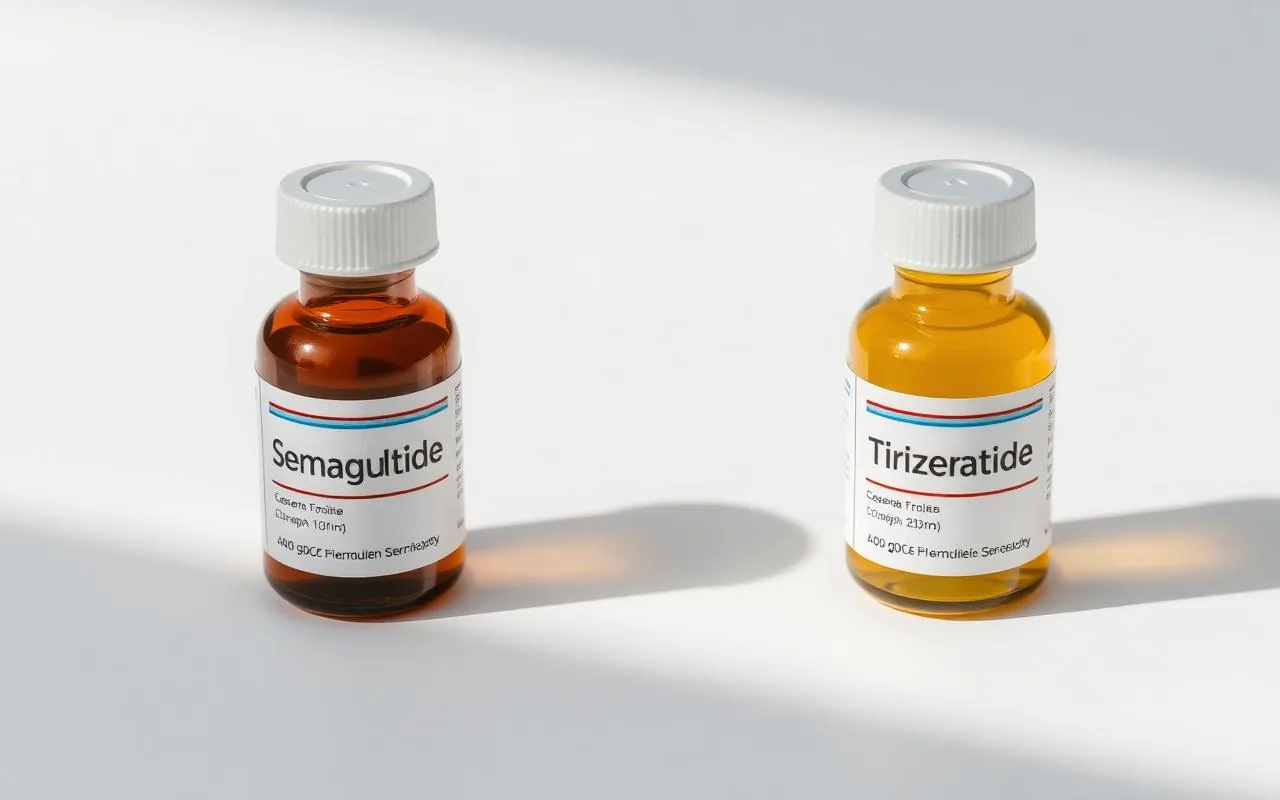
Semaglutide is the most-studied GLP-1 receptor agonist on the market. With over a decade of published trial data behind it, it remains the default reference compound for any metabolic peptide research program, even now that tirzepatide and retatrutide deliver larger absolute effects.
This is a working reference for laboratory and research use. It is not medical advice.
What Semaglutide Is
A long-acting GLP-1 receptor agonist with a half-life of approximately 165 hours, enabling once-weekly subcutaneous administration. The molecule is a modified GLP-1 backbone with a fatty-acid side chain that binds albumin and slows clearance.
Published Outcomes (Quick Synthesis)
From the STEP, SUSTAIN and SELECT trial families:
- •Weight: about 14 to 16 percent mean body weight loss at 2.4 mg over 68 weeks(1)
- •HbA1c: 1.5 to 1.8 percentage point reduction in T2D
- •Cardiovascular: SELECT showed 20 percent MACE reduction in overweight or obese subjects with established CVD(2)
- •Renal: emerging benefit in CKD progression
- •Inflammation: meaningful CRP and IL-6 reductions
Dose-Escalation Design in the Trial Protocols
Titration is documented in the trial literature as the single most important variable for tolerability. The STEP-program protocols used a graduated weekly-injection schedule escalating over roughly 16 weeks to the maintenance dose studied in the trial. Trial data shows aggressive titration is associated with severe nausea and higher dropout, while slower titration schedules produced equivalent long-term outcomes in research cohorts.
Adverse Event Profile in the Trial Data
Most reported events in the trial literature are gastrointestinal:
- •Nausea, reported peaking shortly after dosing and fading within days in trial data
- •Constipation, a commonly reported and generally manageable event
- •Heartburn or reflux, a mechanistic consequence of slowed gastric emptying
- •Loss of appetite, classified as a mechanistic effect rather than an adverse event
- •Fatigue in early trial weeks, frequently attributed to dehydration in trial reporting
Less common but tracked in trial data:
- •Gallbladder events, rapid weight loss is a known risk factor
- •Pancreatic enzyme elevations, rare but reported
Lean Mass as a Trial Variable
Rapid weight loss in the trial data carries a documented lean-mass cost. Research protocols studying this typically combine:
- •Resistance training, studied at defined weekly frequencies
- •Protein intake targets relative to body weight
- •Caloric adequacy during the titration period as a study variable
- •GH-secretagogue combinations, studied in some research contexts
Semaglutide vs Tirzepatide, Quick Decision Frame
Choose semaglutide for research when:
- •You want the largest evidence base in a metabolic protocol
- •The cohort has GI sensitivity. Semaglutide is gentler than tirzepatide.
- •Cardiovascular endpoints are the primary outcome. SELECT data is unmatched.
- •Budget constraints favor a less expensive compound
Choose tirzepatide when maximum metabolic effect is the primary endpoint and GI tolerance is acceptable.
Storage and Reconstitution
- •Lyophilized: 24 months at minus 20 C, 12 months at 2 to 8 C
- •Reconstituted: 28 days at 2 to 8 C in bacteriostatic water
- •Avoid freeze-thaw cycles. Semaglutide loses potency rapidly with thermal stress.
Standard reconstitution: a 2 mg vial plus 2 mL bacteriostatic water gives a 1 mg/mL working solution, per the concentration formula in our reconstitution reference.
Sourcing Semaglutide, What to Verify
The 2024 to 2026 surge in demand created a massive secondary market full of underdosed and mislabeled material. Before purchasing:
- HPLC purity at or above 98 percent at 220 nm. Request the actual chromatogram, not a number on a PDF.
- Mass spec match to the theoretical mass of 4,113.6 Da
- Net peptide content at or above 90 percent
- TFA counterion content disclosed
- Cold-chain shipping with verifiable temperature record
- Lot-to-lot consistency. Track purity across at least three reorders.
At Enlife, every semaglutide order ships with per-lot HPLC and MS available on request, cold-chain dispatched to US, UK, AU and IN.
Bottom Line
Semaglutide is no longer the most powerful GLP-1 agonist on the market, but it remains the best-documented, most predictable and most widely used. For research programs that need a baseline metabolic compound with deep clinical literature behind it, semaglutide is still the right starting point.
For research and laboratory use only. Not for human consumption.
Frequently Asked Questions
How did the STEP trials structure dose escalation?
STEP-program protocols used a weekly-injection titration schedule escalating at defined intervals over roughly 16 weeks to reach the maintenance dose studied in the trial, see the published trial protocol for exact figures.
How is semaglutide typically sourced for research?
As a lyophilized powder in 3, 5, or 10 mg vials with HPLC purity ≥98% and matching mass spec identity. Batch-specific COAs should be provided on request.
What is the reported half-life?
Approximately 7 days, which underpins the weekly dosing schedule.
What are the most common adverse events?
GI-dominant: nausea, diarrhea, constipation, vomiting, peaking during dose escalation and attenuating over 8–12 weeks.
Does semaglutide reduce cardiovascular events?
Yes, SELECT reported a 20% MACE reduction in overweight/obese adults with established CV disease and without diabetes.
References
- Wilding JPH, Batterham RL, Calanna S, et al; STEP 1 Study Group. Once-Weekly Semaglutide in Adults with Overweight or Obesity. N Engl J Med. 2021 Mar 18;384(11):989-1002. PMID: 33567185.
- Lincoff AM, Brown-Frandsen K, Colhoun HM, et al; SELECT Trial Investigators. Semaglutide and Cardiovascular Outcomes in Obesity. N Engl J Med. 2023 Dec 14. PMID: 37952131.
Disclaimer: This article is provided for scientific, research, and educational purposes only. It is not medical advice and is not intended to guide human or animal use of any substance. The compounds discussed are research materials, are not FDA-approved for human use, and are not for consumption. References are to published research and regulatory sources; consult a qualified professional for any health decision. See also our Editorial & Medical Disclaimer and Research Use Only Disclaimer.
Ready to Explore Peptides?
Browse our catalog or use the calculator for instant pricing.