What Are Peptides? A Beginner's Guide
Peptides are everywhere in the wellness world right now, but what exactly are they, and why should you care? Here's the honest breakdown.

A peptide is a short chain of amino acids, the same building blocks that make up proteins, small enough to act as a precise signaling molecule rather than a structural protein. If you've spent any time looking into health optimization, you've probably come across the word. It's talked about in fitness forums, longevity podcasts, and anti-aging clinics, but most explanations either oversimplify or overcomplicate things.
So let's keep it real.
What Exactly Is a Peptide?
Think of proteins as long sentences, and peptides as short phrases. They're smaller, more targeted, and they do very specific jobs in the body.
Your body already produces hundreds of peptides naturally. They act as signaling molecules, telling your cells what to do, heal this tissue, release that hormone, reduce this inflammation.
Why Are Researchers Studying Them?
Interest in synthetic peptides has grown because researchers have developed peptides that mimic, or modulate, signaling molecules the body already produces. Published research has investigated their role in several areas:
- •Tissue repair and recovery pathways following injury
- •Growth hormone secretion mechanisms
- •Skin elasticity and collagen synthesis
- •Inflammatory signaling pathways
- •Sleep architecture
What Does the Research Say About Safety?
This is where it gets nuanced. Peptides studied under controlled research conditions have shown promising profiles, but quality matters enormously. Poorly manufactured peptides can contain impurities that confound results and introduce unpredictable effects in a research model. That's why sourcing from reputable, third-party-tested suppliers is critical for any laboratory research program.
The Bottom Line
Peptides aren't magic molecules. They're precise biological tools that interact with the body's existing signaling systems. When manufactured and sourced correctly, they represent one of the more active frontiers in biomedical research.
From sports-science and recovery labs to anti-aging and longevity research programs, peptides are an active and fast-moving area of study across the research community.
A Slightly Deeper Definition
The textbook line is *"a peptide is a chain of amino acids shorter than a protein,"* and the working cutoff is usually ~50 amino acids, anything longer is generally classified as a protein. But the more useful framing is functional: peptides are signaling molecules. Insulin is a peptide. Oxytocin is a peptide. Glucagon-like peptide-1, the molecule behind Ozempic, is a peptide. Your body uses these short chains to deliver instructions between cells, with much higher specificity than a small molecule drug usually offers.
Why Specificity Matters
A small molecule like ibuprofen acts on enzymes throughout the body, which is why it has both useful effects (pain reduction) and unwanted ones (gut irritation, kidney stress). A well-designed peptide can target a single receptor population. GLP-1 agonists bind primarily to GLP-1 receptors. Ipamorelin binds to the ghrelin receptor with very little crossover to cortisol or prolactin pathways. That selectivity is the core appeal: more signal, less noise.
How Synthetic Peptides Are Made
The dominant manufacturing technique is solid-phase peptide synthesis (SPPS), developed by Bruce Merrifield in the 1960s (Nobel Prize, 1984). Amino acids are added one at a time to a growing chain anchored to a solid resin, with protecting groups preventing unwanted reactions. The result is then cleaved, purified by HPLC, characterized by mass spectrometry, and freeze-dried into the lyophilized vials researchers actually receive.
The Categories Worth Knowing
Peptides are loosely grouped by what they do:
- •Healing / regenerative, BPC-157, TB-500, GHK-Cu
- •Growth hormone secretagogues, Ipamorelin, CJC-1295, Tesamorelin, Hexarelin
- •Metabolic / incretin, Semaglutide, Tirzepatide, Retatrutide
- •Longevity / cellular signaling, Epitalon, Thymalin, MOTS-c, Humanin
- •Neurological / nootropic, Semax, Selank, Cerebrolysin
- •Cosmetic / dermal, GHK-Cu, Matrixyl, Argireline
- •Immune modulators, Thymosin Alpha-1, LL-37
Each family has its own dosing logic, half-life, and storage requirements. There is no single "peptide protocol."
How They Are Administered
Most research peptides are delivered by subcutaneous injection because peptides are destroyed by digestive enzymes if taken orally. Exceptions exist, semaglutide has an oral formulation (Rybelsus) using an absorption enhancer, BPC-157 has an oral form leveraging gut-local action, and a few peptides (Semax, Selank) are administered intranasally. For research purposes, a small insulin syringe is the standard tool.
Common Misconceptions
- •"Peptides are steroids." No. Steroids are lipid-derived hormones; peptides are amino-acid signaling molecules. Different chemistry, different mechanism, different regulatory status.
- •"More is better." Almost universally false. Most peptides have a bell-curve dose-response. Higher doses often produce *less* desirable outcomes due to receptor desensitization.
- •"They are FDA-approved supplements." Most research peptides are not approved for human therapeutic use. They are sold for in-vitro and laboratory research only, and that distinction matters legally.
Quality and Sourcing
The most consistent failure mode in the peptide space is not the molecule, it is the source. Under-purified material can contain truncated sequences, racemized amino acids, residual solvents, and endotoxin contamination that distort any data you collect. Pharmaceutical-grade peptides verified by third-party HPLC and mass spectrometry are the only defensible starting point.
Where to Go From Here
If you are new to the space, the most productive sequence is:
- Pick one well-characterized peptide that targets your area of interest.
- Read the primary literature, not just blog summaries.
- Source from a supplier that publishes third-party COAs.
- Track quantitative biomarkers before and after.
- Reassess at a defined time horizon, usually 8 to 12 weeks.
Peptides are precise tools. They reward research subjects who treat them with the same rigor.
Frequently Asked Questions
What is a peptide, in one sentence?
A short chain of amino acids (typically 2–50) linked by peptide bonds, smaller than a protein and often acting as a signaling molecule.
How do peptides differ from proteins?
Only by size. Peptides are short chains; proteins are long chains that fold into complex 3D structures. There is no universally fixed cutoff, but ~50 amino acids is a common boundary.
Why are peptides interesting to researchers?
They are highly specific signaling molecules, a small peptide can activate a single receptor with fewer off-target effects than a small-molecule drug.
How are research peptides sold?
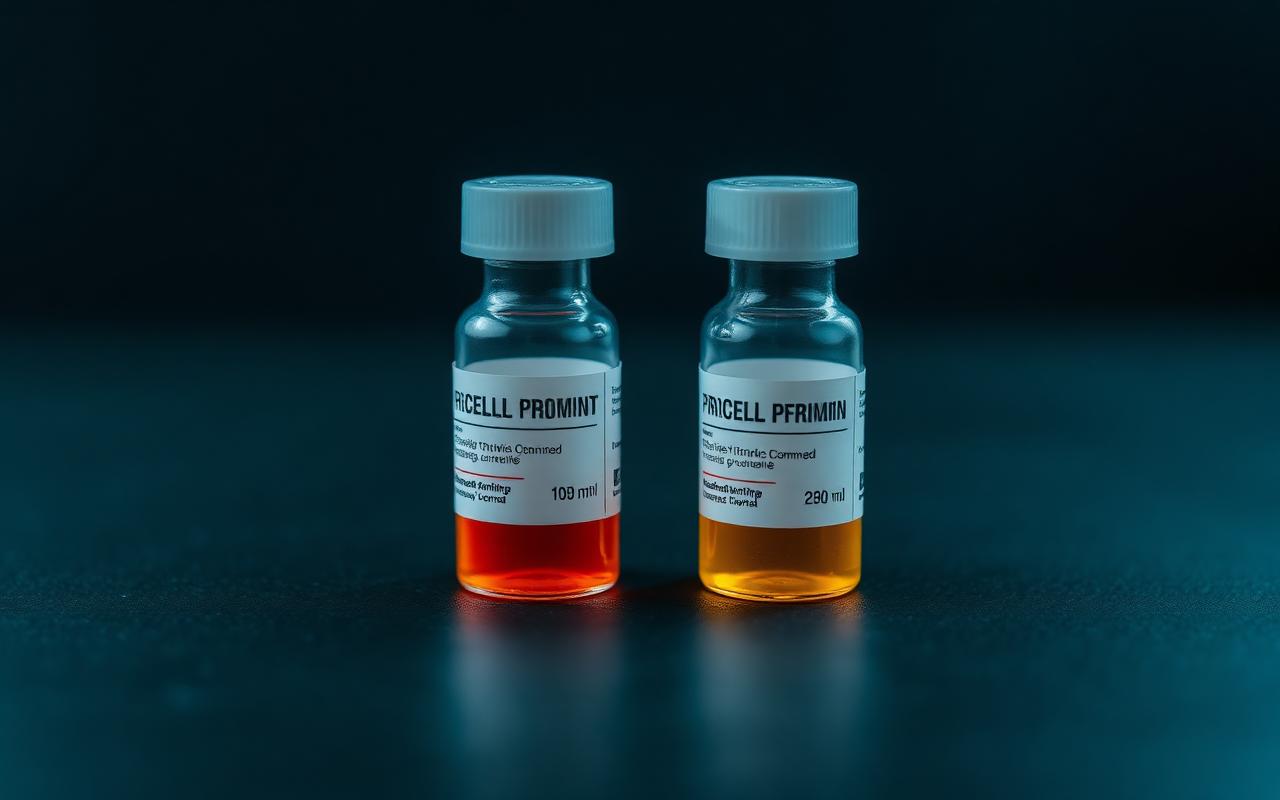
As lyophilized powder in sealed glass vials, sold for laboratory research use only, with a Certificate of Analysis documenting purity and identity.
Are peptides safe?
Safety depends entirely on the specific peptide, dose, route, and context. Research peptides are not FDA-approved for human use and are not intended for human consumption.
Disclaimer: This article is provided for scientific, research, and educational purposes only. It is not medical advice and is not intended to guide human or animal use of any substance. The compounds discussed are research materials, are not FDA-approved for human use, and are not for consumption. References are to published research and regulatory sources; consult a qualified professional for any health decision. See also our Editorial & Medical Disclaimer and Research Use Only Disclaimer.
Ready to Explore Peptides?
Browse our catalog or use the calculator for instant pricing.