How to Reconstitute Peptides: Step-by-Step Guide
Practical step-by-step protocol for reconstituting lyophilized research peptides with bacteriostatic water, sterile technique, dosing math, storage and safe handling for the lab bench.
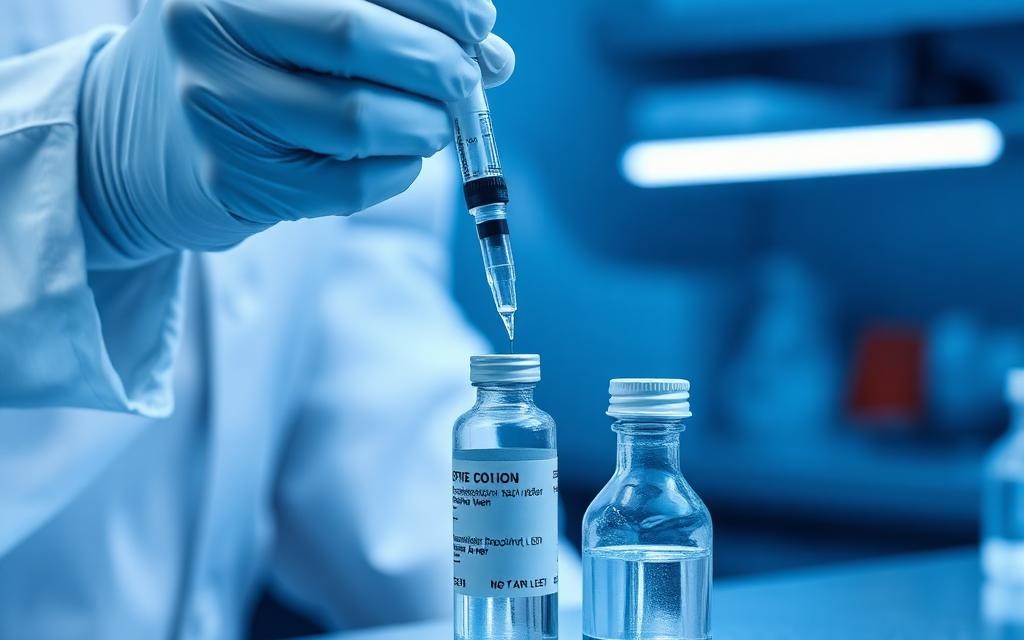
Lyophilized research peptides ship as a dry, freeze-dried cake inside a sealed glass vial. Before any in-vitro assay, they must be reconstituted, dissolved into an aqueous diluent, almost always bacteriostatic water. Done properly, reconstitution takes under two minutes and preserves the peptide's stability for weeks. Done sloppily, it introduces contamination, denatures the peptide, or throws off every downstream concentration measurement.
This is the short, practical bench-side version of the process. For deeper theory, edge cases, and peptide-by-peptide notes, see the complete 2026 reconstitution reference. To skip the math, plug your vial size and desired dose into the peptide reconstitution calculator.
Research use only. The protocol below describes in-vitro laboratory technique. Nothing here is medical advice, and research peptides are not approved by the FDA for human use.
What you need before you start
Gather everything before you break the seal on the vial. Working with one hand while hunting for the other syringe is how contamination happens.
- •Lyophilized peptide vial, allow to reach room temperature (~15 minutes out of the fridge)
- •Bacteriostatic water, 0.9% benzyl alcohol preserved, multi-dose
- •Sterile alcohol prep pads, 70% isopropyl
- •1 mL or 3 mL syringe with a 21-25G needle, for transferring diluent
- •Clean, flat, non-porous work surface, wiped with 70% IPA
- •Sharps container and a permanent marker for labeling
Skip household water, tap water, or saline. Bacteriostatic water (BAC water) is the only diluent that keeps a multi-use vial stable for 28+ days in the fridge.
Step-by-step reconstitution protocol
Step 1, Decide the concentration
Concentration is set by two numbers: the mg of peptide in the vial (printed on the label) and the mL of BAC water you add. The formula is:
mg/mL = peptide mg ÷ mL of BAC water
A commonly cited reference point in the literature is a 5 mg vial with 2 mL of BAC water, giving a 2.5 mg/mL solution. If the arithmetic feels error-prone, the reconstitution calculator computes solution concentration from vial size and diluent volume for laboratory reference.
Step 2, Sanitize both vials
Wash and dry your hands. Wipe the rubber stopper of the peptide vial and the BAC water vial with a fresh alcohol pad. Let both stoppers air-dry for 10-15 seconds. Never touch the stopper with your fingertip after wiping.
Step 3, Draw the bacteriostatic water
Pull back the plunger on your transfer syringe to the exact volume you calculated in Step 1. Insert the needle straight down through the BAC water stopper, invert the vial, and slowly push the plunger to inject air into the vial. This equalizes pressure and makes the water flow smoothly into the syringe. Pull back until you have the target volume, then withdraw the needle.
Step 4, Transfer water to the peptide vial slowly
This is the step most researchers get wrong. Do not blast the water directly onto the lyophilized cake. High-velocity injection can shear the peptide and cause frothing that traps active compound in the foam.
Instead, angle the needle so the tip touches the inside glass wall of the peptide vial, just above the cake. Release the plunger slowly and let the water run down the wall onto the powder over ~10 seconds. Withdraw the needle when the vial is empty.
Step 5, Dissolve without shaking
Do not shake. Do not vortex. Peptides are amphiphilic, vigorous agitation creates foam and denatures the molecule.
Instead, hold the vial between two fingers and swirl gently for 15-30 seconds, or set it on the bench and roll it slowly. Most peptides (BPC-157, TB-500, ipamorelin, CJC-1295, semaglutide, tirzepatide) dissolve within a minute. If the cake looks stubborn, let it sit at room temperature for 5-10 minutes and swirl again. The final solution should be clear and colorless, cloudiness or particulates mean the vial should not be used.
Step 6, Label the vial
Write directly on the vial or on a small label:
- •Peptide name and mg
- •Volume of BAC water added
- •Final concentration (mg/mL and mcg/unit)
- •Date of reconstitution
Undated vials are the #1 cause of "did I already use this?" mistakes and expired-solution use.
Step 7, Store the reconstituted vial
Move the vial to the refrigerator (2-8 °C) immediately after reconstitution. Keep it upright, away from the door (which cycles temperature every time you open the fridge). Most reconstituted peptides remain stable for 28 days refrigerated; for longer storage, aliquot into single-use portions and freeze at -20 °C. Avoid repeated freeze-thaw cycles, each one degrades the peptide.
For a peptide-by-peptide stability table, see the peptide storage & handling guide.
Storage requirements at a glance
| Stage | Temperature | Duration |
|---|---|---|
| Lyophilized (unopened) | 2-8 °C fridge, or -20 °C freezer | 24+ months |
| Reconstituted, refrigerated | 2-8 °C | Up to 28 days |
| Reconstituted, frozen aliquots | -20 °C | 3-6 months |
| Working solution on bench | Room temp | ≤ 4 hours |
Never leave a reconstituted vial on the counter overnight. Never re-introduce a used needle into the BAC water vial, cross-contamination will spoil the diluent and every future reconstitution you draw from it.
Safe handling and lab hygiene
- •Work on a wiped, uncluttered surface with only the tools you need.
- •Change needles between the BAC water vial and the peptide vial to protect sterility.
- •Do not recap needles by hand, drop them straight into a sharps container.
- •If a vial is dropped, cracked, or the stopper is compromised, discard it. Sterility can't be recovered.
- •Keep peptides out of direct sunlight and away from heat sources during handling. UV light degrades most sequences within hours.
Common reconstitution mistakes
- Injecting water directly onto the powder, shears the peptide and creates foam.
- Shaking the vial, denatures the molecule; swirl instead.
- Using tap or sterile (non-bacteriostatic) water for a multi-dose vial, no preservative means bacterial growth within days.
- Forgetting to label the reconstitution date, leads to using degraded material past 28 days.
- Storing on the fridge door, temperature swings shorten shelf life.
- Re-using the same needle across vials, introduces contamination to your BAC water supply.
- Guessing the concentration, always calculate mg/mL, or use the reconstitution calculator.
Complete workflow for a new researcher
- Room-temperature the vial (~15 min).
- Decide BAC water volume → calculate concentration.
- Sanitize both stoppers with 70% IPA.
- Draw BAC water with a transfer syringe.
- Inject slowly down the vial wall.
- Swirl gently until clear.
- Label with peptide, concentration, and date.
- Refrigerate immediately.
- Draw each research dose with a fresh insulin syringe.
Follow that sequence every time and reconstitution becomes a two-minute habit rather than a source of protocol variance.
Frequently Asked Questions
How much bacteriostatic water should I add to a peptide vial?
It depends on the concentration you want. A common default is 2 mL of BAC water per 5 mg vial (2.5 mg/mL, 25 mcg per insulin unit). Use the peptide reconstitution calculator to match BAC water volume to your target dose and vial size exactly.
Can I use sterile water or saline instead of bacteriostatic water?
Only for single-use reconstitution. Sterile water and saline contain no preservative, so a multi-dose vial will grow bacteria within days. For any vial you'll draw from more than once, bacteriostatic water (0.9% benzyl alcohol) is the standard.
Why shouldn't I shake the vial?
Peptides are surface-active. Shaking creates foam that traps and denatures the peptide, lowering the effective concentration. Swirl or roll the vial gently, dissolution is usually complete within 30-60 seconds.
How long does a reconstituted peptide last in the fridge?
Most peptides reconstituted with bacteriostatic water are stable for up to 28 days at 2-8 °C. Highly stable sequences (semaglutide, tirzepatide) tolerate slightly longer; more delicate peptides (BPC-157, some GH secretagogues) are best used within 3-4 weeks. For longer storage, aliquot and freeze at -20 °C.
What if my reconstituted solution looks cloudy or has particles?
Discard it. A properly reconstituted peptide solution should be clear and colorless. Cloudiness, floaters, or a color change signal contamination or peptide precipitation, and the vial is no longer suitable for research use.
Do I need to filter the solution after reconstitution?
No. Bacteriostatic water is already sterile, and sterile filtration through a 0.22 μm filter can bind and remove a fraction of the peptide, lowering concentration unpredictably. Sterile technique during reconstitution is sufficient.
Related reading
- •Complete reconstitution reference (2026), deeper theory, edge cases, and peptide-specific notes
- •Peptide storage & handling guide, full stability tables and cold-chain protocol
- •Peptide reconstitution calculator guide, worked examples for common vial sizes
- •How to buy research peptides safely (USA), sourcing, COAs, and legal framing
Editorial note. All peptides discussed are intended strictly for in-vitro laboratory research and are not approved by the FDA for human consumption or therapeutic use.
Disclaimer: This article is provided for scientific, research, and educational purposes only. It is not medical advice and is not intended to guide human or animal use of any substance. The compounds discussed are research materials, are not FDA-approved for human use, and are not for consumption. References are to published research and regulatory sources; consult a qualified professional for any health decision. See also our Editorial & Medical Disclaimer and Research Use Only Disclaimer.
Ready to Explore Peptides?
Browse our catalog or use the calculator for instant pricing.